Hebrew Word of the Week —
Rofeh (רוֹפֵא) –
The God Who Heals

When we read the Gospels carefully, one truth becomes unmistakable: healing was not a side note in Yeshua’s ministry. It was central. Everywhere He went, brokenness met restoration.

People came to Him carrying visible suffering — blindness, paralysis, chronic illness, weakness. Others carried invisible burdens — shame, guilt, rejection, isolation. And again and again, Yeshua responded with compassion.

The Hebrew word Rofeh (רוֹפֵא, roh-FEH) means healer — one who restores health, repairs what is damaged, and makes whole. It comes from the root rapha, meaning to mend, to cure, to restore.

In the Gospel of Matthew, we read:

“And great crowds followed Him, and He healed them all.”

Matthew 12:15

This short sentence reveals something profound. Yeshua did not hesitate. He did not withdraw from need. Healing flowed from Him naturally because it reflected the heart of God.

Throughout His ministry, healing was more than a miracle — it was revelation. When He opened blind eyes, He revealed that God sees human suffering. When He restored mobility to the lame, He revealed that God moves toward weakness. When He cleansed lepers, He demonstrated that no one is untouchable in the Kingdom of God.

Rofeh is not simply something God does occasionally. It reflects who He is.

But Scripture also shows us that healing in Yeshua’s ministry went deeper than physical restoration. He forgave sins. He restored dignity. He reintegrated outcasts into the community. He brought peace to tormented hearts. His healing addressed the whole person.

The greatest healing of all came through His death and resurrection. Sin — the deepest source of separation and brokenness — was confronted at the cross. Through Yeshua, spiritual healing became available to all who believe.

For modern believers, this word speaks powerfully. Many carry wounds that are not visible: disappointment, anxiety, regret, grief, spiritual dryness. Rofeh reminds us that healing is not foreign to God’s nature. He is not distant from pain. He is not indifferent to weakness.

Healing does not always mean instant change. Sometimes it unfolds gradually. Sometimes it begins internally before it appears externally. But Scripture is clear: restoration flows from the heart of God.

As a pastor, I often meet believers who trust God intellectually yet hesitate to bring their wounds to Him. Perhaps they feel their pain is too small, too complicated, or too long-standing. Rofeh invites us to come honestly.

Yeshua did not turn people away when they came broken. He welcomed them.

This week, if there is an area of your life that feels fractured — whether physical, emotional, or spiritual — remember who He is.

He is Rofeh.
The One who restores what is damaged.
The One who strengthens what is weak.
The One who brings wholeness where there was loss.
And He has not changed.

Prayer:

Lord Yeshua,
You are my healer.
You see the wounds that others cannot see.
Touch the places in my life that need restoration.
Strengthen what is weak, calm what is anxious, and restore what feels broken.
Teach me to trust Your compassion and Your timing.
Amen.

With love and blessings,

Pastor Israel Pochtar

Other Posts today

Beersheba:
Covenant Faith in the Land of Promise

Shabbat Shalom! A few weeks ago, I was in Beersheba, and the time there has stayed with me. Beersheba is not just another southern city in Israel. In Scripture, it becomes one of the markers of the whole land. When the Bible later says “from Dan to Beersheba,” it is describing the full span of […]

Our latest posts

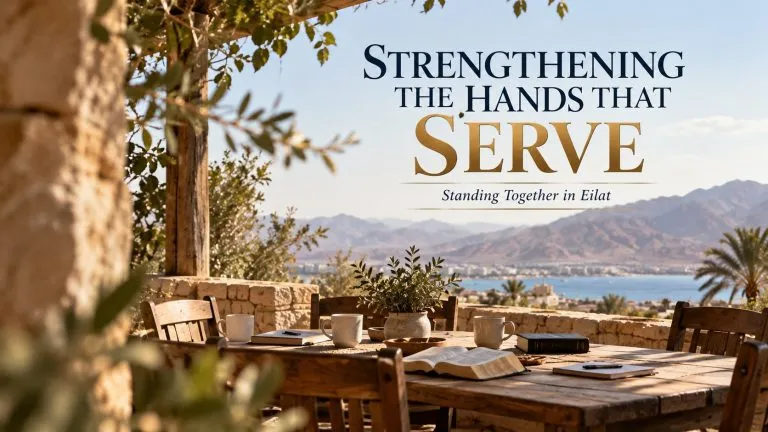
Strengthening the Hands That Serve – Standing Together in Eilat, title graphic over a table with Bibles overlooking Eilat and the Red Sea

Strengthening the Hands That Serve:
Encouraging Our Pastoral Family in Eilat

Pastors spend much of their lives encouraging others. They pray with families, guide people through difficult seasons, teach the Scriptures, and help believers grow in their faith. Yet those who faithfully shepherd others also need moments to step away from their daily responsibilities, share their hearts, and receive encouragement themselves. Recently, Pastor Israel traveled to […]

Until All Israel Hears – The Good News Project, November 3–6, 2026, title graphic over a sunlit Jerusalem stone street

Until All Israel Hears —
The Good News Project

Nearly two thousand years ago, the Good News of Yeshua began spreading from Jerusalem to the nations. This November, believers from those nations will come to Israel to stand alongside our Beit Hallel team, sharing that same message in the streets of the very land where it all began. There is something deeply meaningful about […]

Four Generations. One Place to Call Home —
One Family’s Journey of Aliyah, Resilience, and Belonging

“We have nowhere left to return to. We’ve already returned. Home.” These are Olga’s words, and they tell us something about the family we’ve come to know through our work at Beit Hallel. Since arriving in Israel, Olga and her family have experienced the joy of welcoming a new baby, the challenges of starting over, […]

Where He Walked, They Prayed:
200 Israelis Encounter the Gospel at Magdala

There are places in Israel where the stories of the Bible suddenly feel very close. Magdala, on the shores of the Sea of Galilee, is one of them. Recently, we brought 200 Israelis to this ancient town, where Yeshua (Jesus) ministered in the surrounding region nearly 2,000 years ago. We wanted them to discover more […]

The Stones Are Ancient:
The Gospel Still Changes Lives

Some places carry a history that time cannot erase. Along the shores of the Sea of Galilee, ancient stones still bear witness to the world Yeshua walked through—the villages where He taught, the people He encountered, and the lives that were forever changed by meeting Him.  As we prepare to welcome 200 Israelis to the […]

Hebrew Word of the Week: B’yadcha (בְּיָדְךָ) — Into Your Hand

Hebrew Word of the Week:
B’yadcha (בְּיָדְךָ) —
Into Your Hand

Some things are simply beyond our control. We can pray, make wise decisions, do everything we know to do, and still reach a point where the outcome is no longer in our hands. This can be one of the hardest places for us, because we naturally want to know what is going to happen and […]