This week, as Israel pauses for Yom HaShoah (Holocaust Memorial Day), a siren will sound across the nation. Cars will stop. Streets will fall silent. For two minutes, an entire country stands still—not just to remember history, but to honor lives that still carry its weight. Because for us here in Israel, the Holocaust is not only something we read about—it is something we live alongside.
There are still over 130,000 Holocaust survivors living in Israel today—men and women who endured the unimaginable, who rebuilt their lives from ashes, who carried trauma most of us cannot comprehend… and who are now in their 80s, 90s, and beyond. Every year, we lose thousands. This is truly a rapidly fading generation—living witnesses to one of history’s darkest chapters. And with every passing year, the urgency grows, because when they are gone, the world will be left with stories… but not with voices.

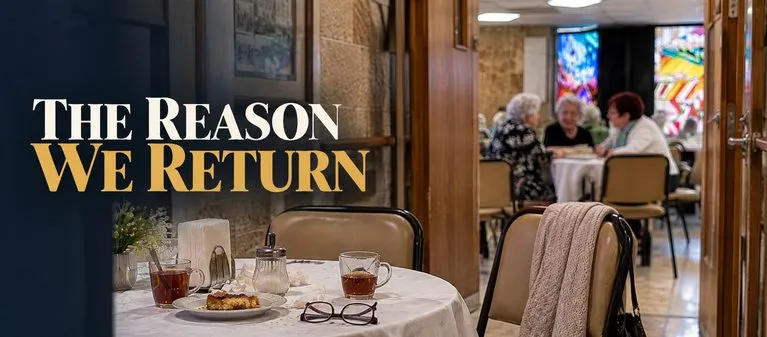
At Beit Hallel, we have the profound privilege of stepping into that gap—not only to remember, but to serve. Through our ongoing outreach, we regularly visit Holocaust survivors in their homes, sitting with them, listening, and bringing practical help—food, essential supplies, warmth—but more than anything, we bring presence. For many of them, loneliness is one of the deepest wounds they carry today. Family members are gone. Friends are gone. The world they once knew has long disappeared.
But when we come, something shifts. There is a light that returns to their eyes, dignity is restored, and there is comfort in knowing they are not forgotten. And often, in those quiet moments, they begin to share—stories of survival, stories of loss, stories of courage that defy understanding. These are not just memories; they are living testimonies—testimonies of what the Jewish people endured and of the resilience that carried them through.

But we are living in a time when remembering is no longer enough. Across the world today, antisemitism is rising again—openly, aggressively, and often without consequence. Even more troubling, we are seeing increasing attempts to deny, distort, or diminish the Holocaust itself. What was once universally acknowledged is now, in some places, questioned or even dismissed. That is why this moment matters so deeply.
To stand with Holocaust survivors today is not only an act of compassion—it is a stand for truth. It is a declaration that we will not forget, that we will not allow history to be rewritten, and that we will honor those who suffered—not only with words, but with action.
For Christians, this carries an even deeper significance. During the Holocaust, while much of the world stood silent, there were believers—ordinary men and women—who chose to stand with the Jewish people at great personal risk. They hid families, protected children, and in some cases gave their own lives.

Today, we have the opportunity to carry that same heart—not in a moment of crisis, but in a moment of remembrance; not in hiding, but in honoring. Your support enables us to continue this sacred work—reaching these precious survivors with practical care, emotional support, and the simple but powerful message: you are not alone… and you are not forgotten.
Time is short. This generation is passing, and with it a living link to history that the world desperately needs. But right now—today—we still have the opportunity to bless them, to sit with them, to care for them, and to honor them while they are still here. As we mark Yom HaShoah this week, we invite you to stand with us—to remember not only with your heart, but with your hands, and to be part of something that truly matters while it still can.
Will you help us continue reaching these dear ones? Your support today will bring comfort, dignity, and hope to Holocaust survivors here in Israel—and ensure that, even in their final years, they are surrounded by love. Because remembering the past is important—but honoring those who lived it is sacred.